Cover
When a Soldier Blocks a Protester: What the Ex-Serviceman’s Confrontation Says About Power, Courage and Civil Rights

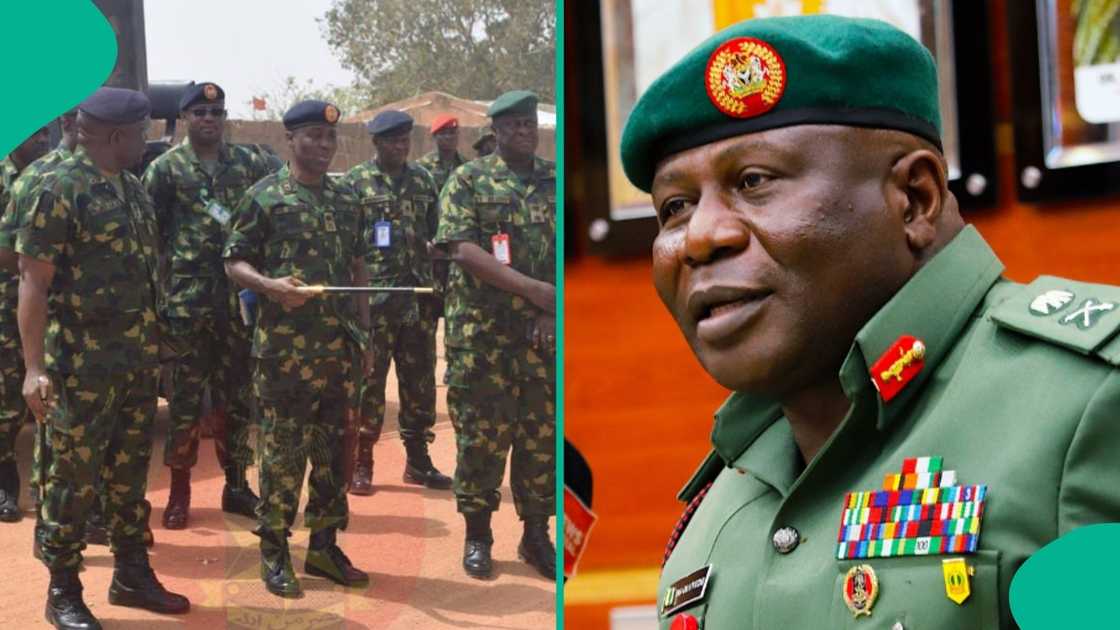
There was something deeply symbolic about the confrontation between an ex-serviceman and soldiers deployed to stop a protest. In a moment that could easily have descended into chaos, a former member of the security establishment stood before armed personnel and challenged their attempt to prevent the protesters from moving forward.

According to a report by Naija News published on August 19, 2026, the ex-serviceman declared that he was not afraid of guns while confronting the soldiers who were blocking the protest.
Beyond the drama of the encounter, however, lies a much bigger question: What happens to a democracy when the sight of a uniform and a firearm becomes enough to silence citizens?
The ex-serviceman’s courage is noteworthy because he understands, perhaps more than the average citizen, what a firearm represents. He knows the training, discipline and authority behind the uniform. Yet his decision to confront the soldiers sends a powerful message: security personnel are supposed to protect citizens, not make citizens afraid to exercise their legitimate rights.
That distinction is important.
A protest is not necessarily an act of hostility against the state. In a democracy, peaceful protest can be one of the most visible ways citizens communicate frustration, demand accountability or draw attention to issues they believe have been ignored. The presence of soldiers should therefore not automatically transform a peaceful gathering into a confrontation between the state and its citizens.
At the same time, protesters also have responsibilities. The right to protest does not mean the right to destroy property, attack security personnel or endanger other citizens. Peaceful expression requires discipline from both sides.
This is where professionalism becomes critical.
A soldier or police officer carrying a firearm possesses an enormous advantage over an unarmed civilian. That power comes with an equally enormous responsibility. The restraint expected from security personnel should be higher precisely because they possess the capacity to cause serious harm.
The ex-serviceman’s confrontation should therefore not simply be celebrated as an act of bravery. It should provoke a broader conversation about how security agencies manage demonstrations and how citizens can exercise their rights without turning public spaces into battlefields.
There is also a lesson for the military and other security agencies. Public confidence cannot be built solely through the display of weapons or the deployment of personnel. It is built when citizens see security officers as professionals who understand the difference between maintaining order and suppressing legitimate expression.
Nigeria has experienced painful episodes in which encounters between protesters and armed security personnel produced consequences far beyond the original dispute. Historical reporting has documented allegations of excessive force, including shootings and mistreatment of civilians during periods of unrest.
We should not need another tragedy before learning the lesson.
The image of an ex-serviceman standing before armed soldiers should therefore be viewed as more than a viral confrontation. It is a reminder that authority is strongest when it is exercised with restraint.
The soldier should not see every protesting citizen as an enemy. The citizen should not see every soldier as an oppressor.
Between those two extremes lies the principle Nigeria desperately needs: lawful authority, responsible citizenship and mutual respect.
A gun can compel silence, but it cannot create genuine trust. A uniform can command obedience, but it cannot by itself command respect.
The ultimate measure of a security institution is not how effectively it can disperse a crowd, but how professionally it can protect order while respecting the dignity and lawful rights of the people it has sworn to protect.
That is the conversation this confrontation should start. Not “Who was braver?”, but “How do we build a country where citizens do not need to challenge guns before their voices can be heard?”
That is the real test of democracy.








How Mobile Banking Makes Everyday Transactions Easier

Globacom Wraps Up 2026 Ofala Festival with Grand Royal Banquet in Onitsha

CP Felix Ohagwu Pays Condolence Visit to Family of Late Afenifere Leader, Pa Reuben Fasoranti

Tragedy in Abule Egba as Man Dies While Trying to Rescue Toddler Who Fell into Well

Liverpool Rally From Two Goals Down to Beat Villarreal in Seven-Goal Thriller

Adron Chairman Adetola Emmanuelking Congratulates Anthony Osibodu on Bobajiro Coronation

Adron Homes Inaugurates New AHPORA Executives at Treasure Park & Gardens Phase 2 Extension

BREAKING: Afenifere Leader, Pa Reuben Fasoranti, Is Dead

Yinka Quadri Reveals Why He Abandoned School to Rescue Father’s Business

Ondo Police Arrest Two Suspected Armed Robbers, Recover Locally Made Guns in Akure

Fidelity Bank Champions Digital Adoption, Sustainable Growth for Lagos SMEs

Gbirimojo of Epinmi Kingdom Celebrates Ooni of Ife on Birthday, Reaffirms Traditional Rulers’ Role in Yoruba Unity

LIFANIMA 2026: Lagos Counts Down to a Decade of Animation and Creative Innovation

Liverpool Fight Back to Beat Brentford 2-1, End Hosts’ Unbeaten Run

Igwe Achebe Hails Globacom for 15-Year Support for Ofala Festival