Cover
POWER IS A BUS-STOP: WHEN YOU ALIGHT, WILL YOU LEAVE A FRAGRANCE OR A STENCH? BY OSIFO WASHINGTON


A Comparative Study in Humility, Arrogance and the Vanity of Power – Why Some Leaders Remain Kings After Office and Others Become Strangers in Their Own Land.

OPENING QUOTE.
“Power does not change a man, it only unveils him. The humble becomes humbler, the arrogant becomes crueler. And when power departs, what remains is not the office you occupied, but the character you displayed.”- OSIFO, Osa Washington, Esq., Ph.D.
INTRODUCTION: THE MAN AFTER OFFICE.
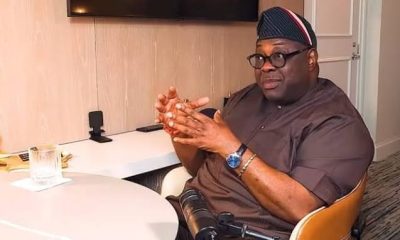
Today, I met former Governor Ayodele Fayose of Ekiti State. There was no convoy blaring, no protocol fencing people off. In his usual natural, free and humble style, he mixed with all classes of persons, giving to everyone undiluted love, warm affection and respect in its purest form.
And while we had some interface on the subject of life before, within and outside office, one thing stood out clearly: he has and has remained who he is, down to earth.
Flowing naturally from that encounter, what readily came to mind was the character of men, especially those who have been exalted to high positions of authority. This brought to memory a similar reflection, akin to the two-faced personality I once wrote about.
In that moment of deep reflection, one person readily came to mind, Mr. Godwin Obaseki, Governor of Edo State as he then was, with all the arrogance in governance as though it was never going to come to an end.
I vividly remember during his reign as Governor, he paid a visit to the highly revered Oba of Benin, His Royal Majesty, Omo N’Oba N’Edo, Uku Akpolokpolo, Oba Ewuare II. The Royal Majesty, in his infinite wisdom, cautioned him on the need to be humble and to relate well with people. He solemnly reminded him that one day, his tenure was bound to end as Governor. The revered Monarch expressed deep fears that he may, by his unacceptable conduct, banish himself and become an eternal stranger to the same people he governed after office. Today, that royal prophecy appears to have come to pass in the realm of public perception.
It is upon this premise that we must do a befitting paper on this topic with a befitting and catching title.
PART I: TWO TYPES OF LEADERS – BRIDGE BUILDERS AND WALL BUILDERS.
Building upon that royal admonition, history teaches us that leaders fall into two categories.
The Bridge Builders: They understand that office is a temporary bus-stop. They use power to connect. They build bridges of empathy, accessibility, performance and human kindness. They know that the driver today will be a passenger tomorrow. Therefore, they greet everyone at the bus-stop with dignity.
In contrast, however, The Wall Builders: They understand power as an empire. They build walls – walls of protocol, walls of arrogance, walls of vindictiveness, walls that separate them from the people. They govern with condescension. They forget that immunity is not immortality, and that power is transient.
As I have always said: “Power is like palm-wine, when it enters a wise man, he remains calm; when it enters a foolish man, he begins to stagger and insult his own village.”
PART II: THE EDO TEST CASE.
Consequently, Edo State gives us a perfect laboratory for this comparative analysis.
Adams Oshiomhole: Loved or hated, you cannot ignore him. From Government House to the street, he has maintained good street credibility. Why? Because he performed, he connected, he fought with his people, not against his people. Today, years after leaving Osadebey Avenue, he walks freely in Benin, in Iyamho, in Auchi, in markets. He is still Comrade. The people still own him. That is the enduring dividend of a bridge.
Flowing from that, Lucky Igbinedion, Professor Oserheimen Osunbor, and others, each has his rating, although a few are far ahead in rating due to the high performance impact they had on the people during their era as Governor, but none became a stranger in his land. They attend weddings, funerals, festivals in Edo. They are still part of the social fabric of the State.
On the opposite side of the divide, Mr. Godwin Obaseki represents the opposite archetype. His style of governance was widely perceived as being characterized by aloofness, intellectual arrogance, and a deliberate distancing from the political class, the traditional institution, and the common man.
As I noted in a previous reflection: “When you govern the people as if you will never need them again, the day you need them, they will remember you as if they never knew you.”
PART III: BEYOND EDO – THE NATIONAL AND GLOBAL MIRROR.
Moving beyond Edo State, this is not an Edo disease. It is a national and global affliction.
At home in Nigeria: Look at Alhaji Lateef Jakande of Lagos – till death, he entered public buses and the people carried him like a father. Look at Dr. Goodluck Jonathan – he left office with humility and today is more celebrated out of office than he was in office. These are classic bridge builders.
In contrast, we have seen other leaders who left office and could not walk their own streets without heavy security. They built walls around Government House, and after office, those walls became their prison.
Extending this comparison to leaders past and present beyond Nigeria and Africa to the world in general, the same dichotomy holds true.
For global good examples, look at Nelson Mandela of South Africa – after 27 years in prison, he came out to build bridges of reconciliation, forgave his jailers, and united a nation. Till today, his name opens doors worldwide.
Now, contrast him with his direct opposite, Mobutu Sese Seko of Zaire, who built walls of opulence and fear, looted his nation, and when power left him, he died a lonely, miserable exile in Morocco, unable to return to his homeland. Or Robert Mugabe of Zimbabwe, who started as a bridge builder but ended as a wall builder.
Similarly, in Europe, look at Winston Churchill – voted out after winning World War II, yet remained deeply loved by Britons because he had connected with them. Contrast him with Nicolae Ceaușescu of Romania, who built a palace with walls while his people starved, and ended up executed by the same people he governed.
And in Asia, Lee Kuan Yew of Singapore built bridges of development and is still revered after death, unlike Ferdinand Marcos of the Philippines who built walls of cronyism and died in exile in Hawaii.
As I have always posited: “The true test of power is not how many people you command when you are in office, but how many people welcome you when you are out of office.”
PART IV: THE PRESIDENCY – THE ULTIMATE BRIDGE BUILDER
Flowing seamlessly from the above, this work would indeed be incomplete if we do not bring in the President of the Federal Republic of Nigeria, His Excellency, President Bola Ahmed Tinubu, GCFR.
He was and has always been a bridge builder. He did it in Lagos as Governor, and now as President, he is doing it.
As Governor of Lagos State from 1999 to 2007, Asiwaju Bola Ahmed Tinubu did not build walls of exclusion; he built bridges of inclusion. He opened Lagos to all Nigerians irrespective of tribe, tongue or faith. He assembled a cabinet that reflected Nigeria itself – Igbo, Hausa, Yoruba, Christian, Muslim. He mentored young talents who today are Governors, Ministers, Senators and captains of industry. He turned Lagos from a chaotic state into a modern economic hub because he connected with the people, not disconnected from them.
Even after leaving office as Governor in 2007, he did not become a stranger in Lagos. In fact, he became more relevant. For 16 years out of office, his street credibility never waned. The markets of Alaba, the streets of Ikeja, the palaces of Obas, the mosques and churches – all still welcomed him. That is the hallmark of a bridge builder. His bridge did not collapse when his convoy left.
Now as President of the Federal Republic of Nigeria, he is doing the same at the national level. His style remains consultative, approachable, and fatherly. He opens the doors of the Villa to traditional rulers, to youths, to opposition, to market women. He understands what many wall builders never understood- that the Presidency is not a fortress to hide in, but a bridge to connect a diverse nation of over 200 million people.
This is why, in and out of office, his political family keeps growing. This is why he continues to earn the love, adoration and respect of his people after office, during office, and will continue to earn it long after office.
This is the direct antithesis of the Obaseki model. One built bridges that outlived his tenure; the other built walls that imprisoned his legacy.
As I have always said: “The leader who builds bridges will never lack a road back home; the leader who builds walls will need a visa to visit his own people.”
PART V: THE NEW HOPE-THE PRESENT GOVERNOR OF EDO STATE.
Flowing from the presidential example above and drawing lessons therefrom, it is important to state that the present Governor of Edo State, His Excellency, Senator Monday Okpebholo, is doing well and appears to be learning from the presidential bridge-building model.
Like Mr. President who made appointments beyond boundaries as Governor of Lagos State, Okpebholo is doing the same in Edo State.
He is accessible, simple, and people-focused. His early steps indicate a leader who understands that governance is about the people, not about self. He relates well with the traditional institution, respects elders, and connects with the common man on the street.
Two historic appointments best illustrate this inclusive bridge-building spirit.
First, the appointment of an Igbo man, Mr. Martin Oli, an indigene of Enugu State, into his cabinet as Commissioner. In a bold statement of “no discrimination in Edo,” Governor Okpebholo made him the first non-indigenous Commissioner in his cabinet, reaffirming that merit, competence and character take precedence over ethnicity, background or personal connections.
Second, the appointment of a physically challenged person as Permanent Secretary, the first in the history of Edo State. Governor Okpebholo swore in Mr. Melody Omosah, a visually impaired civil servant, as Edo’s first visually impaired Permanent Secretary, describing it as a historic milestone and a testament to the belief that ability, competence and character, not disability, should define opportunity.
These two actions mirror the Tinubu Lagos model-where appointments were based on competence, integrity and capacity rather than tribe or place of origin. It is governance that builds bridges across ethnic lines and bridges across physical limitations.
Consequently, by God’s divine guidance, I have no doubt that he will continue on this path, and also continue to earn what money cannot buy-the love, adoration and respect of his people after office, like Comrade Adams Oshiomhole and like President Bola Ahmed Tinubu.
For as I always say: “A leader who remembers the people in office will be remembered by the people out of office.”
And also: “When you appoint beyond your tribe, you govern beyond your tenure.”
CONCLUSION: THE AFTERLIFE OF POWER
To bring this home, Ayodele Fayose taught me again today: You do not need protocol to be respected; you need character. You do not need sirens to be loved; you need humility.
Ultimately, power ends. Tenure ends. Convoy ends. Security votes end. What remains is character. What remains is how you treated people when you had the chance to treat them anyhow.
To all who hold power today — whether as President, Governor, Minister, Commissioner, Chairman, etc- remember:
“You will leave office one day, but office will not leave you – it will follow you as either a fragrance or a stench.”
“Do not use power to intimidate the people who gave you power; use power to elevate them. Because the day power leaves you, you will need the people you intimidated.”
“The greatest legacy is not the buildings you erect, but the bridges you build in the hearts of men.”
And finally: “History does not remember how long you ruled; it remembers how well you related.”
Let those who have ears, hear.
OSIFO, Osa Washington, Esq.
LL.B; B.L; LL.M, MPA; Ph.D Comparative Politics And Development Studies); Ph.D (Law in view)
Lawyer | Political Scientist | Public Administrator | Policy Analyst
Date: October 30, 2026.







POWER IS A BUS-STOP: WHEN YOU ALIGHT, WILL YOU LEAVE A FRAGRANCE OR A STENCH? BY OSIFO WASHINGTON

Ekiti Police Arrest 11 Suspects Over Attack on Sowore in Ado-Ekiti

Fidelity Bank, Humanitarian Affairs Ministry Distribute 2,000 Food Packs to Vulnerable Abuja Residents

Ondo Police Probe Death of 46-Year-Old Man in Igba, Recover Two Empty Sniper Bottles

2027 Elections: INEC Clears Pantami, Rejects Adebutu’s Petition as Gwarzo’s Fate Hangs in Balance

NAF to Continue Salaries of Igbokoda Crash Victims Until Death Benefits Are Paid

Opinion: It Is Time to Look Beyond Primate Ayodele’s ‘Political Prophet’ Label

Hardship: FG Approves ₦70,000 Monthly Transport Allowance for Workers for Six Months

Niger NSCDC Commandant Conducted Deadly Minna Raid Without HQ Approval – Panel

Police Arrest 22-Year-Old Over Viral Video Allegedly Inciting Religious Violence in Zamfara

Polaris Bank Deepens Cancer Advocacy, Backs Early Detection and Patient Support

Harry Kane Wins 2026 Ballon d’Or, Ends England’s 25-Year Wait

Adeleke Reopens Talks With Oyetola’s Camp, Seeks Unity for Tinubu’s Re-election

Fidelity Bank to Host Abuja Business Forum, Target SME Growth

Dangote Refinery IPO: Investors Rush for Shares as Offer Closes Tuesday