Cover
Investigative Journalist, Fisayo Soyombo Spends Days in Sahara Desert, Documents Brutality, Starvation, Exploitation of Migrants

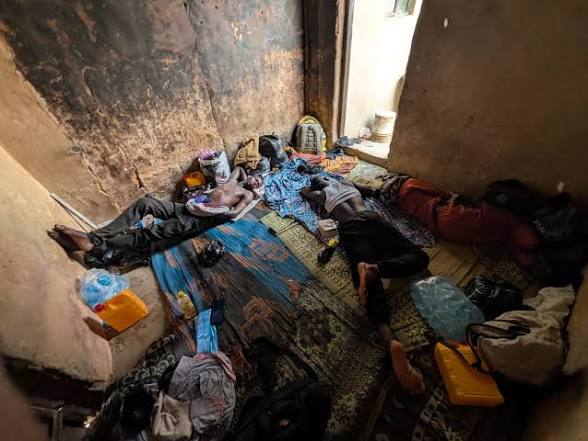
Investigative journalist ‘Fisayo Soyombo has documented harrowing experiences faced by African migrants attempting to reach Europe through the Sahara Desert, detailing extreme hardship, exploitation and life-threatening conditions along the route from Niger Republic to Libya.

Soyombo, who spent 47 days undercover posing as an irregular migrant, travelled from Kano in Nigeria through Niger Republic and into Libya as part of an investigation into the networks facilitating illegal migration across the Sahara and onward to Europe.
In the second part of his three-part investigation published by the Foundation for Investigative Journalism (FIJ) on Thursday, Soyombo described the journey from Agadez in Niger Republic through the desert, saying the experience progressively stripped migrants of their dignity, belongings and control over their lives.
According to him, the journey officially became more dangerous after a group of migrants departed Agadez in an overloaded Toyota Tundra truck on June 12, 2026.
He said passengers were forced to endure extreme heat, dust, hunger and physical injuries while travelling through remote desert routes.
Soyombo recounted how two migrants, identified as Bamidele and Austin, sustained bleeding head injuries after their head coverings became entangled in thorny shrubs while the truck navigated narrow desert paths.
The journalist also described how the truck became stuck in mud before continuing towards Emzig’ghar in northeastern Niger.
As night fell, the driver allegedly maintained a dangerously high speed, despite the darkness and the hazardous terrain.
Soyombo estimated that the vehicle travelled at speeds ranging between 140km/h and 180km/h, while the driver reportedly switched off the headlights to avoid attracting attention.
He said the migrants were compelled to remain awake because falling from the overloaded truck could prove fatal.
One of the most dangerous moments came when a truck travelling with their convoy broke down deep inside the Sahara.
Soyombo said the migrants were left stranded under an intense desert sun, with no trees, buildings or shade nearby.
The group reportedly spent hours waiting for mechanics to repair the vehicle while struggling with the fear of exhausting their water supplies.
He said the incident gave him a firsthand understanding of how vehicle breakdowns can become fatal for migrants travelling through the desert.
“Any travel setback, such as vehicle breakdown, an accident or an arrest, could be fatal,” the journalist reported.
The investigation also documented alleged exploitation by traffickers and the harsh treatment of migrants, including being denied access to shade while waiting under extreme temperatures.
Soyombo further reported encounters with military checkpoints where migrants were allegedly required to provide personal information and pay money before being allowed to continue.
At one checkpoint, he said he paid 5,000 CFA francs for himself and additional money to cover other migrants.
The investigation also highlighted the poor living conditions endured by migrants along the route.
Soyombo documented instances where leftover food was reportedly thrown towards migrants by traffickers, comparing the manner in which it was delivered to the treatment of animals.
He said the migrants were often left to sleep in open desert areas, exposed to extreme temperatures and without adequate shelter.
The journalist further reported that more than 100 Nigerian migrants had previously been stranded at a settlement known as Gerin Rabiu for more than three months while waiting to continue their journey.
According to his account, some had become severely frustrated and psychologically distressed after prolonged confinement and uncertainty.
Soyombo’s own journey was also delayed in Agadez, where he spent several days waiting for transportation to Libya.
He said he eventually departed Agadez aboard a Tundra truck with other migrants, including Nigerians and a migrant from Niger Republic.
The investigation forms part of a three-part series examining the realities of irregular migration from West Africa through the Sahara Desert and into Libya, with the ultimate goal of crossing the Mediterranean Sea into Europe.
Soyombo’s account provides an undercover look at the network of traffickers, makeshift migrant camps, dangerous transportation systems and extreme environmental conditions encountered by people undertaking the route.
The investigation also raises concerns about the risks faced by migrants, including dehydration, vehicle accidents, physical assault, trafficking, abduction and death in the desert.


Appeal Court Clears Fidelity Bank in Fundamental Rights Case

Court Halts Reinstatement of Retired Senior Police Officers

Peter Obi Vows to Jail Anyone Who Rigs Election Under His Government

Investigative Journalist, Fisayo Soyombo Spends Days in Sahara Desert, Documents Brutality, Starvation, Exploitation of Migrants

Dangote Foundation Targets Two Million Women with Refinery IPO Shares

Dangote Refinery IPO: Investors Can Now Subscribe Through Moniepoint POS Agents

EFCC Declares Ex-Pension Boss Abdulrasheed Maina Wanted

Plateau Attacks: Police Officer, Four Others Killed Despite Curfew

EFCC Opens Fresh Probe Into Mambilla Power Deal, Atiku, Malami, Others Named

President Tinubu Celebrates Oluremi, Recalls Years of Love, Sacrifice and Partnership

Fidelity Promotes 13% of its Workforce, Reinforces Performance-Driven Culture

FG Sets Up Panel To Probe Deaths Of 37 NSCDC Detainees, Suspends 20 Officers

Niger State Govt Declares 24-Hour Curfew in Minna After Protest Over Deaths of 37 Suspected Illegal Miners

Toyin Abraham Explains Why She Rejected APC Campaign Council Appointment

Emir Sanusi Urges Kano Residents to Take Ownership Stake in Dangote Refinery