Banking/Finance
Fidelity Bank: Amuchie Set to Build on Onyeali-Ikpe’s Legacy as New CEO Takes Over in 2027

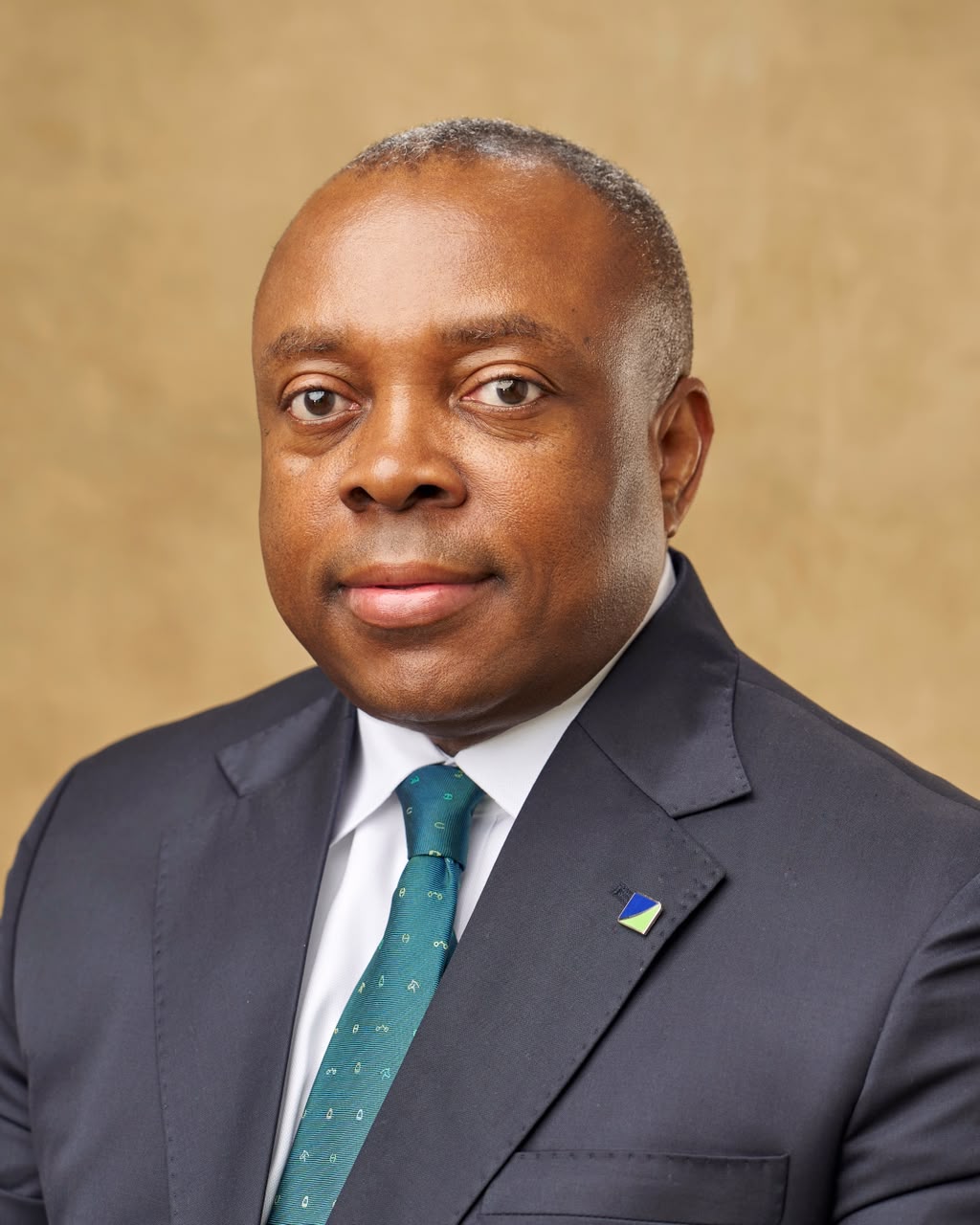
Outgoing CEO leaves behind a stronger, more profitable and internationally positioned lender as Stanley Amuchie prepares to lead the bank’s next phase of growth.

Fidelity Bank Plc is set for a leadership transition on January 1, 2027, as Mr Stanley Chiedoziem Amuchie prepares to take over as Managing Director and Chief Executive Officer from Dr Nneka Onyeali-Ikpe, whose tenure ends on December 31, 2026.
Amuchie, currently an Executive Director and Chief Operations and Information Officer of the bank, assumes the position following approval by the Central Bank of Nigeria (CBN), inheriting an institution that has recorded significant growth in profitability, customer deposits, capital strength and international presence under Onyeali-Ikpe’s leadership.
Since taking over in January 2021, Onyeali-Ikpe has overseen a major transformation of the financial institution, repositioning it from a mid-tier lender into one of Nigeria’s leading banking institutions.
Her administration was driven by a seven-pillar strategy focused on brand refresh, performance discipline, digital transformation, workforce transformation, service excellence, innovation and accelerated growth.
The impact of the strategy is reflected in the bank’s financial performance.
Profit before tax increased from N28.1 billion in 2020 to N347.7 billion in 2025, representing a compound annual growth rate of 65.4 per cent. Return on average equity also rose from 10.5 per cent to 24.4 per cent within the period.
Similarly, customer deposits grew from N1.699 trillion to N6.891 trillion, while net loans and advances increased from N1.326 trillion to N4.282 trillion. The bank’s customer accounts also expanded from approximately 5.7 million to more than 12 million.
By 2025, Fidelity Bank had emerged as the sixth-largest bank in Nigeria, while its share price, which stood at N2.52 at the end of 2020, reached N23.00 in November 2026.
These achievements were recorded amid challenging economic conditions, including the aftermath of the COVID-19 pandemic, currency reforms, rising inflation, tight monetary policies and the banking sector’s recapitalisation exercise.
Expanding Nigerian Businesses into Global Markets
Beyond financial performance, Onyeali-Ikpe’s tenure also witnessed efforts to connect Nigerian businesses with international markets through the Fidelity Nigeria International Trade and Creative Connect (FNITCC).
The initiative, which held editions in London in 2022, Houston in 2023 and Atlanta in 2025, was designed to promote Nigerian businesses, particularly small and medium-scale enterprises, and create opportunities for international trade.
Speaking at the Atlanta edition, Onyeali-Ikpe explained that the bank initially focused on educating small businesses on export fundamentals in partnership with Lagos Business School before establishing an international platform to showcase their products and services.
She emphasised the need to diversify Nigeria’s economy away from excessive dependence on oil, describing access to international markets as an important pathway to export growth and shared prosperity.
The bank also strengthened its international presence through the July 2023 acquisition of Union Bank UK Plc, now known as FidBank UK, providing a strategic foothold in London to facilitate trade and investment opportunities.
Successful Eurobond and Recapitalisation Drive
Another significant milestone under Onyeali-Ikpe was the bank’s successful access to international capital markets.
In October 2021, Fidelity Bank raised $400 million through a five-year Eurobond at a coupon rate of 7.625 per cent. The offer attracted strong investor interest, with the order book exceeding $750 million, and the bond was fully redeemed at maturity in October 2026.
The bank also moved early to meet the CBN’s revised minimum capital requirement of N500 billion for banks with international authorisation.
Through its 2024 public offer and rights issue, Fidelity Bank raised N175.85 billion, with the offers recording oversubscription rates of 237.92 per cent and 137.73 per cent, respectively.
A subsequent private placement in 2025 brought total allotted equity proceeds to approximately N402.9 billion, strengthening the bank’s capital position.
Staff Welfare and Workforce Development
Onyeali-Ikpe’s administration also placed considerable emphasis on employee welfare and capacity development.
The bank implemented salary increases across all staff grades in 2022, 2024 and 2025, including two separate 20 per cent increases within eight months.
Annual staff promotions also increased from 337 employees in 2024 to 433 in 2026.
Other welfare initiatives included the provision of staff buses, improved medical support, expanded training opportunities and the extension of the bank’s mortgage scheme to employees below the Manager cadre.
Strengthening Support for SMEs
The outgoing CEO also strengthened the bank’s commitment to small and medium-scale enterprises through targeted empowerment and business development initiatives.
In February 2025, Fidelity Bank unveiled its SME Hub in Gbagada, Lagos, equipped with training facilities and Creativerse studios designed to support creative entrepreneurs and small businesses.
At the launch, Onyeali-Ikpe emphasised that SMEs required more than financial assistance, noting that the hub would provide opportunities for capacity development, business growth and improved access to non-oil export markets.
In July 2025, the bank further empowered 100 SMEs with free business and inventory management systems.
The beneficiaries received desktop point-of-sale systems equipped with ERPRev software, barcode scanners, bookkeeping training, six months of monitoring and Fidelity POS terminals with instant settlement.
In an address delivered on her behalf by Amuchie, Onyeali-Ikpe described SMEs as critical drivers of innovation, resilience and inclusive economic growth.
The initiative was particularly significant given the contribution of SMEs to Nigeria’s economy, accounting for approximately 96 per cent of businesses and employing more than 80 per cent of the workforce.
Her contributions to the banking industry earned her the national honour of Officer of the Order of the Niger (OON) in 2023 and the Award for Excellence in Banking Leadership at the 2026 BusinessDay BAFI Awards.
Amuchie’s Experience and the Task Ahead
As Amuchie prepares to assume leadership, industry attention will increasingly focus on his ability to consolidate the gains recorded under his predecessor and steer the bank towards another phase of sustainable growth.
Notably, he is not unfamiliar with the institution’s transformation journey, having played significant roles in several of its strategic milestones.
He joined the bank as Chief Technical Consultant in March 2021 and led the $400 million Eurobond transaction, which refinanced an earlier 10.50 per cent issue and reportedly saved the bank approximately $11.5 million annually.
He also facilitated the early release of $128 million in deposits held with the CBN, making Fidelity Bank the first institution to receive such credit.
Following his appointment to the Board in January 2022, Amuchie assumed responsibility for the bank’s Operations and Information Technology directorate, overseeing more than 3,500 employees.
His contributions include leading the acquisition of Union Bank UK, negotiating a $40 million facility with the African Export-Import Bank (Afreximbank) to support the acquisition, anchoring the bank’s capital-raising programme and driving its digital transformation initiatives.
Amuchie’s professional background spans more than three decades in the financial services industry.
A First-Class graduate of Industrial Chemistry from the University of Benin, he is a Fellow of the Institute of Chartered Accountants of Nigeria (ICAN).
He began his professional career at Arthur Andersen in 1995 before spending more than 18 years at Zenith Bank Plc, where he rose through the ranks to become Group Chief Financial Officer.
With a stronger capital base, expanded international operations, growing customer deposits and an established brand, Fidelity Bank enters the leadership transition from a position of considerable strength.
While Onyeali-Ikpe leaves behind a legacy of expansion, institutional transformation and improved financial performance, Amuchie faces the task of translating these achievements into greater innovation, operational efficiency, competitiveness and sustainable shareholder value.
Having played an instrumental role in building the foundation, the incoming CEO now has the opportunity to take Fidelity Bank to greater heights.









2027 Elections: Court Nullifies Omo-Agege’s NDC Senatorial Ticket, Orders INEC to Delist Him

CAS Overturns CAF Decision, Restores Senegal as 2025 AFCON Champions

2027 Elections: NDC Boycotts IGP’s Security Meeting, Accuses Police of Bias

Fidelity Bank: Amuchie Set to Build on Onyeali-Ikpe’s Legacy as New CEO Takes Over in 2027
Fidelity Bank replaces an Amazon with a Titan as Amuchie assumes office as MD/CEO

Dangote Cement Records 60% Drop in Road Accidents, Trains 3,000 Drivers

Fidelity Bank Appoints Stanley Amuchie as Managing Director, CEO from January 2027

CP Johnson Babalola Assumes Duty as 48th Ondo Police Commissioner, Pledges People-Centred Policing

Jimmy Odukoya Breaks Silence on Succession Dispute, Denies ₦250m Fraud Allegation

‘Have Some Shame’: Kwankwaso’s Daughter Blasts Kano Governor Abba Yusuf Over Divorce

Juan Mata Announces Retirement From Professional Football at 38

ORE AREA COMMAND GETS A NEW LOOK AS ACP IWASOKUN FOSTERS PEOPLE-FRIENDLY POLICING AND COMMUNITY SUPPORT

Uganda Woos Dangote for $Billion Oil Refinery, Fertiliser and Salt Projects

Dangote Sinotruk Unveils Nigeria’s First Locally Assembled Electric Heavy-Duty Truck

Atiku Tackles Tinubu Over Plateau Apology, Says Residents Needed Him During Attacks